
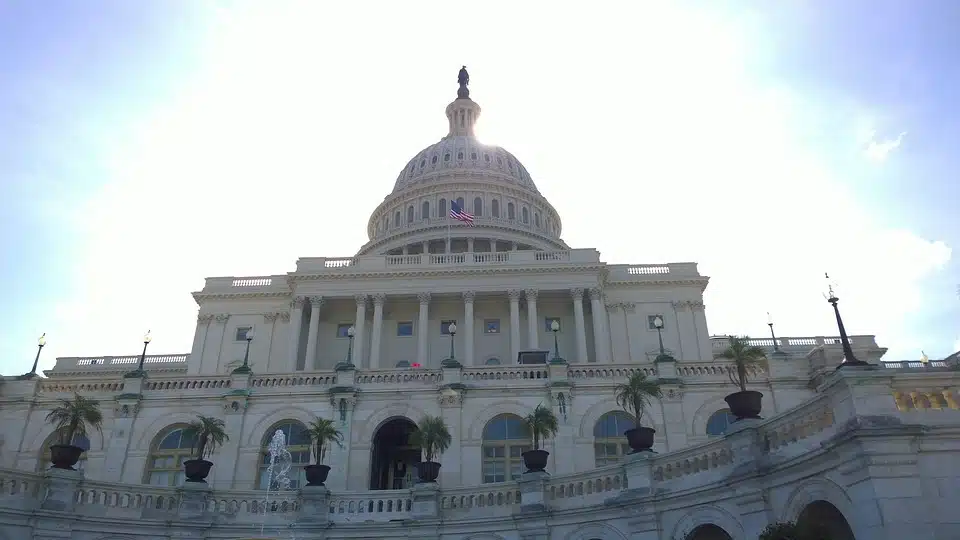
It’s spring break in Washington, D.C. At least for Congress. After approving the fiscal year 2025 continuing resolution that will keep the federal government’s doors open until September 30, lawmakers are back in their states and districts this week.
There’s little chance members of the U.S. House and Senate are resting easy, however. While they may have dealt with one impending deadline last week, when they return to the nation’s capital next week, they will face a still-daunting task list that will start with one very important additional deadline: raising the debt ceiling.
What else will be on Congress’s agenda for the spring and summer? Let’s take a look.
Late Summer: Debt Ceiling Deadline Hits
Nearly two years ago, in June 2023, federal lawmakers approved legislation that suspended the United States’ statutory debt limit until January 1, 2025. That expiration date has come and gone, but Congress has yet to do anything about it. So far, the federal government has avoided default through the U.S. Treasury Department’s implementation of several so-called extraordinary measures. According to Reuters, most analysts believe these measures will run out this summer, in July or August. (The actual “x date” can only be determined once the Treasury Department has a better sense of the government’s revenues and expenditures over the next few months.)
If Congress does not act before then, the financial markets will become even more volatile. But the damage wouldn’t be limited to Wall Street. The last time the United States faced a potential breach of the debt ceiling, in 2023, National Public Radio and PBS explored how it would affect Americans. The news outlets noted a breach would likely:
- Trigger a financial crisis with potentially severe consequences like a stock market crash or a recession;
- A potential selling off of Treasury securities, which would lead to a sharp decline in bond prices and a spike in interest rates;
- A general erosion of the public’s confidence in the U.S. government, which could result in additional political volatility;
- A delay or suspensions in payments for federal programs like Social Security, Medicare, Medicaid, and veterans’ benefits;
- A government shutdown since the U.S. government could not meet its spending obligations; and
- An international crisis since other countries would lose confidence in the U.S. dollar and the U.S. economy.
Earlier this month, Steven Mnuchin, who served as secretary of the U.S. Treasury during the first Trump administration, underscored the urgency of raising the nation’s statutory debt limit. “Republicans need to get the debt ceiling into a reconciliation bill quickly,” former Secretary Mnuchin said.
As Secretary Mnuchin suggested, the current vehicle Republicans are considering for a debt limit increase is their budget reconciliation package. On Monday Reuters reported, “Senate Finance Committee Republicans, who discussed spending cuts with Trump at the White House last week, said the president wants the debt limit to remain part of the legislation. ‘We need things like the debt limit, because it’s the only leverage we have to get down to reasonable spending levels,’ said Senator Ron Johnson, of Wisconsin, who attended the White House meeting.”
That strategy brings us to another key item on Republicans’ agenda: budget reconciliation.
What Is The Status Of Budget Reconciliation?
One advantage of adding the debt limit to budget reconciliation is that it lowers the vote margin needed for approval of an increase in the U.S. Senate. Normally, a bill to raise the debt limit would require 60 votes in the upper chamber of Congress. But the budget reconciliation process lowers that mark from 60 to 51, or 50 when the vice president casts a tie-breaking vote. In other words: budget reconciliation would protect debt limit legislation from being filibustered in the Senate.
While there has been some disagreement among Republicans about whether to separate their economic agenda into two budget reconciliation bills — one that deals with tax policy and another that tackles spending issues — last month, U.S. House lawmakers took the first step toward approving “one big, beautiful bill” as President Donald Trump refers to it. In addition to raising the debt limit, this bill would:
- Provide $4.5 trillion over 10 years to extend expiring provisions of the 2017 Tax Cuts and Jobs Act and implement other Trump tax priorities like ending taxes on tips and adjusting the 2017 state and local income tax deduction limit;
- Provide $300 billion in new spending for border security and immigration enforcement;
- Cut spending for nonmilitary spending programs, including an $880 billion reduction in Medicaid over 10 years; and
- Increase funding to promote U.S. energy independence.
According to Punchbowl News, when they return next week, Senate Republicans will meet with the chamber’s parliamentarian “to get guidance on” what scoring method they can use for the tax provisions of the reconciliation. (Scoring refers to the determination of how much a certain policy is going to cost the U.S. government.) Republicans want to use what is called “the current policy baseline” since, as Punchbowl explained, it “would essentially say it costs nothing to extend the 2017 tax cuts … rather than the more than $4.5 trillion price tag under Congress’ typical tax scoring methods.”
The discussions between Senate Republicans and the parliamentarian are expected to take a few weeks. In the meantime, Republicans will continue writing their budget reconciliation bill in hopes of gaining approval for it in the U.S. House and Senate before debt ceiling extraordinary measures expire in July or August.
While “one big, beautiful” budget reconciliation package that includes tax cuts, GOP spending priorities, and a debt ceiling increase will take up most of lawmakers’ time – and Republican leadership’s political capital – over the coming months, there are still other items on Congress’s to-do list.
Senate Will Continue To Consider Trump Administration Nominations
With the exception of Rep. Elise Stefanik’s (R-N.Y.) nomination to be United Nations ambassador, all of President Trump’s cabinet nominees have been confirmed by the Senate.
That milestone is a feat, but the Senate’s confirmation work is far from over. As the Partnership for Public Service has explained, there are more than 800 positions President Trump needs to fill where the nominee will require Senate confirmation.
President Trump has picked 236 nominees to fill key roles in his administration so far, but only 32 have been confirmed. The full Senate has yet to vote on the nominations of Paul Atkins to serve as chair of the U.S. Securities and Exchange Commission (SEC), Jonathan McKernan to be director of the Consumer Financial Protection Bureau (CFPB), or Jonathan Gould to serve as comptroller of the currency. The chamber also has yet to confirm the Treasury Department’s deputy secretary and general counsel, the deputy director of the Office of Management and Budget and the deputy director of the Office of the U.S. Trade Representative, and Federal Trade Commission nominee Mark Meador.
Earlier this week, President Trump nominated current Federal Reserve Governor Michelle Bowman to be the central bank’s vice chair for supervision. To be elevated, Bowman, who would succeed Michael Barr, also would require Senate confirmation.
Given that many of the president’s executive actions are wending their way through the federal court system, the Trump administration also may try to address the dozens of judicial vacancies that exist today. (According to the U.S. Courts system, there are 43 current vacancies out of 870 total judgeships.) As is the case for executive branch nominees, there are five steps for filling these posts: a presidential nomination, a U.S. Senate committee hearing, a vote by a U.S. Senate committee to report the nominee to the full Senate, a confirmation vote by the U.S. Senate, and a confirmed nominee taking the oath of office.
As if this list of to-dos was not daunting enough, there is one other directive from the White House that lawmakers may try to tackle this spring and summer: solidifying President Trump’s status as the “crypto president.”
What’s On Tap For Digital Assets?
Members of Congress were working to advance the Trump administration’s deregulatory agenda even before leaving for recess late last week.
They started by undoing some significant Biden administration policies. In early March, for example, U.S. senators voted 51-47 for a Congressional Review Act (CRA) resolution to abolish the CFPB’s “larger participant” rule for digital payment companies. This rule, finalized in November, would have allowed agency examiners to determine whether the largest digital wallet providers — those handling more than 50 million transactions a year — are complying with the Electronic Fund Transfer Act and other consumer financial protection laws. The fintech industry has objected to that level of oversight, while large financial institutions have championed it.
Meanwhile, the U.S. House approved a CRA resolution to nullify an Internal Revenue Service (IRS) ruled that would have required entities implementing decentralized financial transactions to report certain information regarding digital asset sales to the IRS. Republicans will try to get both of these CRAs to President Trump’s desk when they return to the nation’s capital.
While these rollbacks did not have bipartisan support, legislation to address stablecoins does, which means it’s ripe for congressional action over the coming months. Indeed, lawmakers already have made a start on this priority. On March 13, the U.S. Senate Banking Committee approved the Guiding and Establishing National Innovation for U.S. Stablecoins Act of 2025, better known as the GENIUS Act, on an overwhelmingly bipartisan 18-6 vote. The legislation would establish a comprehensive regulatory framework for the issuance and regulation of payment stablecoins in the United States.
Meanwhile, members of the House Financial Services Committee (HFSC) have started work on the committee’s STABLE Act, which will impact payment stablecoin issuers, protect consumers, and foster competition and innovation. This bill is a priority for HFSC Ranking Member Maxine Waters (D-Calif.) and Chairman French Hill (R-Ark.) who has argued, “A properly regulated stablecoin market can strengthen the U.S. dollar’s dominance, modernize our payments infrastructure, and promote financial access without government overreach. It is essential that we are deliberate and get this job done and done right.”
Buckle up for a busy spring in Washington, D.C.