
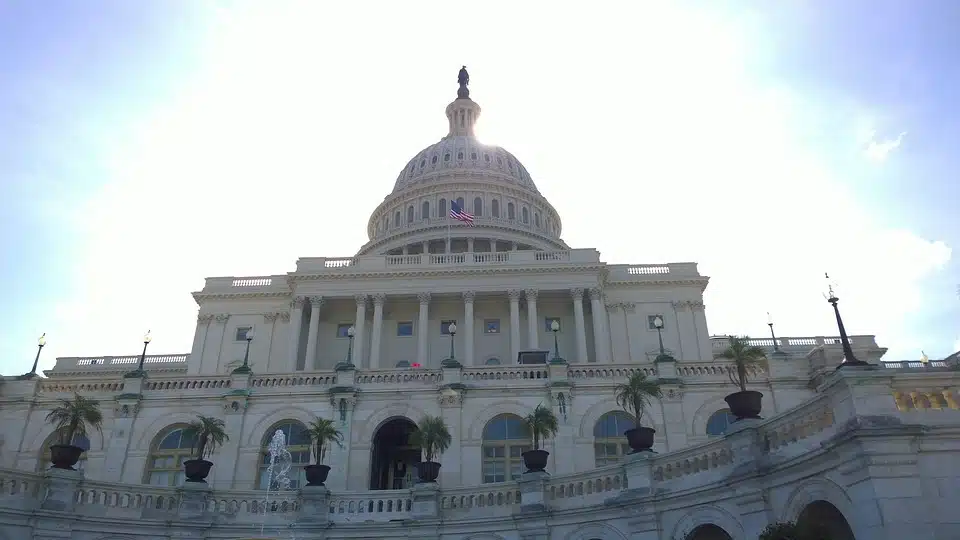
The U.S. government is shut down. After an unproductive meeting between President Donald Trump and a bipartisan group of congressional leaders earlier this week, and after the U.S. Senate failed once again yesterday to approve a House-passed continuing resolution (CR), at 12:01 a.m. this morning federal agencies halted all non-essential operations.
The fallout for the U.S. economy and the American people is likely to be broad and profound — and, if the Trump administration has its way, the effects may last even after the shutdown ends.
This week we examine what those outcomes might be, what operations have and have not halted, the White House’s plan for permanently downsizing the federal workforce, and how this stalemate is playing with the American people so far.
Federal Operations: What Happened After Midnight Last Night?
This morning, more than 750,000 federal employees did not have to show up for work. These “non-essential” workers have been furloughed. According to The New York Times, nearly 90 percent of employees at the Environmental Protection Agency have been furloughed, as have 81 percent of workers at the Department of Commerce, 71 percent of Department of Housing and Urban Development employees, 23 percent of U.S. Small Business Administration employees, and 11 percent of Department of Justice workers.
Collectively, these employees earn about $400 million a day.
According to Bloomberg Government, the U.S. Securities and Exchange Commission (SEC) will keep fewer than 400 staff on the job, the Commodity Futures Trading Commission (CFTC) will retain a few dozen employees for basic oversight of derivatives markets, and the Federal Trade Commission (FTC) will keep about one-third of its staff, including approximately one-half of the competition team and one-fifth of its consumer protection division.
Federal employees who have been deemed essential are still on the job, but most will not be paid until the shutdown ends.
The shutdown will affect businesses, financial services, and the government’s economic data gathering. For example:
- Companies filing to go public could see delays since the SEC is, as The New York Times said, “operating with a skeleton staff [that] won’t prioritize processing I.P.O. paperwork.”
- The Treasury Department’s Small Dollar Loan Program and the Community Development Financial Institutions Fund will see delays in funding, so low-income consumers seeking assistance could be forced to turn to payday lenders and other predatory companies.
- At the Department of Agriculture, which administers payments for the Supplemental Nutrition Assistance Program (SNAP) and the Special Supplemental Nutrition Program for Women, Infants, and Children (WIC), payments will stop once the programs run out of reserves, leaving many Americans who rely on assistance unable to purchase groceries.
- Most U.S. Small Business Administration loan programs and entrepreneurial training and export programs will stop functioning.
- The Bureau of Labor Statistics (BLS) will not collect or release data, including the latest jobs report that was supposed to be released this Friday. The BLS also may not release the latest results for the Consumer Price Index, which are scheduled for publication on Oct. 15.
- The National Flood Insurance Program will not be able to issue new policies or renewals, which could slow the approval of mortgage applications since obtaining flood insurance is a vital part of the process for some prospective homeowners.
Some federal programs and services will not be interrupted, including:
- Internal Revenue Service tax collection, enforcement, and customer service;
- Federal Housing Administration mortgage operations;
- Air traffic control and Transportation Security Administration (TSA) — though travelers should expect longer lines at airports;
- Social Security, Medicare, and Medicaid benefits;
- The U.S. Postal Service;
- Federal courts;
- Health care for military veterans; and
- The FTC will continue to process submissions from firms seeking approval for mergers.
How Might The 2025 Federal Government Shutdown Harm The Economy?
Federal lawmakers, investors, and most political analysts seem to be bracing for a long shutdown. As are some politicians. This week, President Trump even suggested that, sometimes, “a lot of good can come from shutdowns.”
A Congressional Budget Office analysis of the longest shutdown in U.S. history — 34 days from late 2018 to early 2019 — estimated the economic cost of the stalemate was $3 billion, or $882 million per day.
As Politico reported Monday, in a note to clients, Deutsche Bank economists estimated that furloughing 750,000 to 800,000 federal employees would drag down U.S. economic growth by about two-tenths of a percentage point for each week federal agency doors are shuttered.
Consumers (especially those who earn government paychecks) spent less during the last shutdown, but the stalemate also caused disruptions in commerce elsewhere. In a newsletter this morning, AXIOS reminded readers that during the 34-day shutdown from 2018 to 2019, record numbers of TSA agents called in sick. Over Martin Luther King Jr. weekend in 2019, “10 percent of airport screeners missed work, and on the shutdown’s final day, the absence of just 10 air traffic controllers temporarily shut down travel at LaGuardia, and brought delays at other major airports, primarily around the East Coast.”
A shutdown also could affect U.S. employment. According to the Morning Brew newsletter, the 16-day shutdown in 2013 led to a slowdown in private-sector job growth by about 120,000 jobs.
Part of the reason for the reduction? In 2013, companies that could not obtain the federal government permits they needed to operate had to make staff cuts.
Will The White House Permanently Cut The Federal Workforce?
The economic impact could be even more profound this year.
That’s because, late last week, the Office of Management and the Budget (OMB) — the arm of the White House responsible for overseeing the implementation of the president’s agenda and managing workers across the vast federal bureaucracy — distributed a memo to federal agencies instructing the leadership to prepare mass layoff plans in the event of a shutdown. Unlike in each of the previous ten shutdowns, in which OMB has instructed federal agencies to simply furlough federal workers until Congress approves a new funding bill, which has historically provided for full back pay to impacted workers, last week’s OMB directive makes clear that the Trump administration intends to permanently fire scores of federal workers across the government.
White House officials have not yet pulled the trigger on this idea, but President Trump certainly is entertaining it. “We can do things during the shutdown that are irreversible, that are bad for them [Democrats] and irreversible by them,” the president told the White House press corps last week. “Like cutting vast numbers of people out.”
White House press secretary Karoline Leavitt reiterated that position this Monday. When asked by the press corps if OMB would carry out permanent layoffs during a government shutdown, Leavitt said, “There will be if Democrats don’t keep the government open.”
Yesterday, the American Federation of Government Employees and American Federation of State, County and Municipal Employees filed a lawsuit to keep the Trump administration from making permanent cuts to the workforce.
How Do Americans Feel About The 2025 Federal Government Shutdown?
In a newsletter this morning, The Hill wrote, “How long this shutdown lasts depends on how well each side believes it’s faring in the eyes of the public.”
Because the shutdown just started, there are not yet surveys examining how Americans feel about it in practice. They did not like the idea of a shutdown in theory, however, and wanted lawmakers to do everything possible to avoid a stalemate.
A New York Times/Siena poll found almost two-thirds of respondents said Democrats should not vote to shut down the government if their demands to extend Affordable Care Act subsidies were not met. That number included nearly 6 in 10 independents and 43 percent of Democrats.
Regarding which party would be responsible for the shutdown, a NPR/PBS News/Marist Poll found 38 percent of respondents said Republicans would be mostly to blame if the government shuts down, while 27 percent said they would mostly blame Democrats. Thirty-one percent said they would blame both sides equally.
After the 2018-19 shutdown, Republicans took most of the blame. (As a reminder, President Trump was in the White House at the time, but Republicans were in charge of the U.S. House in late 2018. Democrats held that chamber in January 2019 when the shutdown ended.) According to a January 2019 ABC News/Washington Post poll, 53 percent of Americans viewed President Trump and the GOP as mainly responsible for the shutdown. Only 29 percent of Americans blamed Democrats.
As far as plans to end the current stalemate, there are not many.
Senate Majority Leader John Thune (R-S. Dakota) plans to continue to hold votes on the House-passed CR until he has enough support from Democrats to approve it. Three Democrats already are on his side: Sens. John Fetterman (D-Penn.), Catherine Cortez Masto (D-Nev.) and Angus King (I-Maine), which means Sen. Thune needs to pick off five more and the federal government will be fully up and running again, at least until late November.
The next Senate vote is scheduled for this afternoon. Tomorrow, the Senate will not convene due to the observance of Yom Kippur. The chamber is expected to be in session on Friday, and possibly through the weekend if necessary.