
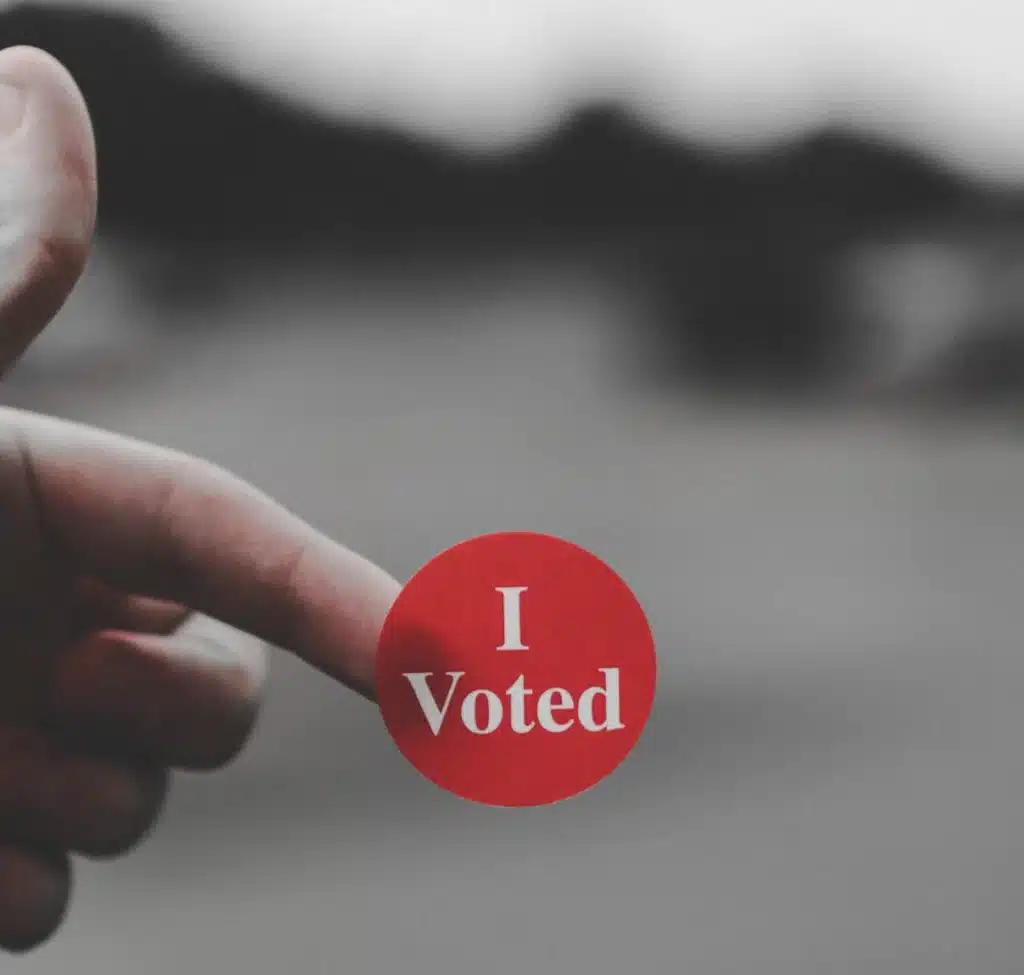
Preparing for the count, the recounts, and the litigation that could decide the winners of the 2024 elections.
The day after Election Day 2024 is two weeks from today. All polls, analyses, and hot takes indicate the races for the White House and control of the U.S. House of Representatives are as close as close can be. (In the U.S. Senate, Republicans appear to have the advantage.)
The simple fact that voting will be over on November 6 does not mean we will know the outcome of these contests. Four years and a pandemic ago, President Joe Biden was not declared the winner of the 2020 presidential race until Saturday, November 7, a full four days after Election Day. By contrast, the 2016 presidential election was called one day after voting concluded. The 2000 presidential election between eventual winner, President George W. Bush, and then-Vice President Al Gore was not called by the Associated Press until 46 days after Election Day and a Supreme Court decision.
As political analyst Bruce Mehlman wrote on Sunday, during the “fraught” nine-week window o between Election Day and the day the U.S. House of Representatives will certify the outcome of the presidential election, the country will “need to count the votes, conduct any recounts, and certify results in state capitals potentially roiled by protests.”
What could the days and weeks after Election Day look like this year? Let’s take a look.
Results Could Take Longer Than In 2020
As noted above, in 2020 it took four days for the national news networks to call the election for President Biden. In some states, it took congressional races much longer to be resolved. U.S. Rep. Claudia Tenney waited until February 5, 2021, a month after the new Congress had begun and three months after Election Day, to be ruled the winner in New York’s 22nd Congressional District, for example.
The country could be in for some long days and nights again this year, and not only because so many races are so close. Indeed, in September AXIOS reported that election rules experts were warning “most swing states’ vote counting and certification procedures could again extend beyond Election Day, despite a mixed bag of rule changes.” As examples, AXIOS noted:
- Arizona’s drawn-out process of counting the votes is unchanged from 2020. “The process of verifying signatures on early ballots that are dropped off on Election Day causes notoriously long delays in finalizing results,” AXIOS said. For example, in 2022, Maricopa County hired more temporary workers to verify signatures and it still took a week to declare a winner in that year’s governor’s race.
- In Pennsylvania, county officials have been “sounding the alarm” that counting again will probably take days since the state does not allow offices to begin opening mail-in ballots until 7 a.m. on Election Day.
- In Wisconsin, a bipartisan effort that would have allowed election officials to begin processing absentee ballots before Election Day failed to gain enough support for passage in the state legislature.
Lawmakers in other swing states like Georgia, Michigan, and Nevada have approved measures they hope will speed up the vote counting. In Nevada, for example, election clerks can begin tabulating early vote ballots as soon as polls open. Back in 2020, they had to wait until polls closed on Election Day before they could begin tabulating.
As a reminder, any of the calls or projections offered on election night are preliminary. In the days after Election Day, “election officials will release updated vote counts as more votes are counted,” the Bipartisan Policy Center explained. Dates for certifying the presidential results vary by state but every state must be done counting votes by the time members of the Electoral College meet on December 17, 2024.
A Multitude Of Recounts?
Each state has its own rules dictating when a recount is triggered. According to FairVote.Org:
- Nebraska, South Carolina, and Wyoming all require a margin of one percent or less;
- Alabama, Arizona, Colorado, Connecticut, Florida, Kentucky, New York, North Dakota, Pennsylvania, and Washington all require a margin of 0.5 percent or less;
- Hawaii, New Mexico, and Ohio all require a margin of 0.25 percent or less;
- Oregon requires a margin of 0.2 percent or less;
- Michigan requires a margin of less than 2,000 votes; and
- Alaska, Montana, South Dakota, and Texas all require there be an exact tie to launch an automatic recount.
The other 28 states do not have automatic recount rules though recounts can be requested.
An analysis by FairVote found that, between 2000 and 2023, there were 6,929 statewide elections, including for U.S. president, U.S. senator, governor, secretary of state, ballot measures, and other offices. Out of the 6,929, there were just 36 recounts – 23 automatic and 13 requested – or fewer than two recounts per year.
FairVote also found only three out of the 36 recounts from 2000 to 2023 resulted in changed outcomes. These were the 2004 Washington state governor’s race, a state auditor’s race in Vermont in 2006, and a U.S. Senate race in Minnesota in 2008. “In all three reversals, the initial margin between the top two candidates was 0.06 percent or less,” FairVote said. “In comparison, the average margin for recounts that did not result in an outcome reversal was 0.21 percent.”
For the presidential race, recounts in various states may not even be the biggest source of worry and delay.
An Electoral College Tie? It’s Possible
To earn the title of President of the United States a candidate must earn a majority of the Electoral College’s 538 votes.
Because that number, 538, is divisible by two, a tie is possible. According to an analysis by Project 538, there is about a 1-in-300 chance that neither Vice President Kamala Harris nor former President Donald Trump will attain the necessary 270 electoral votes. For context, the odds that a pregnancy will produce twins is one in 250.
Is a tie likely? Maybe not. Is it possible? Certainly.
As the nonpartisan Congressional Research Service (CRS) explains, in the event of an Electoral College tie, the U.S. Constitution requires Congress to conduct a “contingent election.” Contingent elections were necessary in both the 1825 and 1837 presidential elections.
In a contingent election, the U.S. House of Representatives would choose the president. The top three candidates who won the most electoral votes would be on the “ballot,” but lawmakers would vote as state delegations, not as individual lawmakers. In other words, a candidate would need the support of at least 26 state delegations out of 50 to win the White House.
The members of the U.S. Senate would pick the vice president from the remaining two candidates who received the most Electoral College votes. The outcome of that vote would be based on the vote of individual senators, with a simple majority needed to win.
And what if House lawmakers cannot settle on a president? “If the House is unable to elect a president by the January 20 inauguration day, the 20th Amendment provides that the vice president-elect would act as president until the impasse is resolved,” wrote CRS. “If neither a president nor vice president has been chosen by inauguration day, the Presidential Succession Act applies, under which the speaker of the House of Representatives, the president pro tempore of the U.S. Senate, or a cabinet officer, in that order, would act as president until a president or vice president qualifies.”
Nervous yet? Well …
Courts Also Could Be Very Busy During Post-Election Season
The likelihood that courts will have to deal with post-election challenges is high. Indeed, the lawsuits have already begun. The Republican National Committee (RNC), for example, has lodged legal challenges in Michigan and North Carolina challenging overseas ballots. Specifically, as CNN explained, the RNC wanted to “block state policies that allow for citizens abroad to cast ballots in those states if their parents (or, in Michigan, their spouse) resided in those states before leaving the country, even if the voters themselves never lived there.”
In decisions issued over the last week, the RNC lost both cases. In Michigan, a judge called the RNC’s lawsuit an “attempt to disenfranchise” voters and said Republicans “presented no substantial evidence” of the fraud they claimed they were trying to prevent.
It is unclear if the RNC will appeal these outcomes. Even if it doesn’t, there are plenty of other court cases out there.
In fact, according to Bruce Mehlman, Election 2024 could be “the most heavily litigated election in U.S. history.”
Election watchers at Bloomberg agree. They are tracking 165 lawsuits that already have been launched related to this year’s elections. According to Bloomberg, more than half of these cases have been filed in the seven states where polls show the race is closest between Vice President Harris and former President Trump. Republicans have filed more than 55 percent of the cases. Along with absentee ballots, the GOP challenges concern how states maintain the voter rolls, when mail-in ballots are due, and what election officials can and cannot do as they attempt to finalize the results. Democrats and left-leaning groups have challenged Republican-led states over what they argue are illegal barriers to voting, meanwhile.
There is also this fact: the Supreme Court of the United States took on a lighter caseload this term specifically because the justices wanted to leave room for election-related reviews and lawsuits.
In other words, it’s a safe bet that you can go to sleep early on Election Night without missing the winner being declared.