
Earlier this month, the consulting firm McKinsey & Co. released a lengthy report outlining all of the ways the organization believes artificial intelligence (AI) can be leveraged to improve people’s lives and protect the planet.
Clearly, the firm believes in the promise of AI.
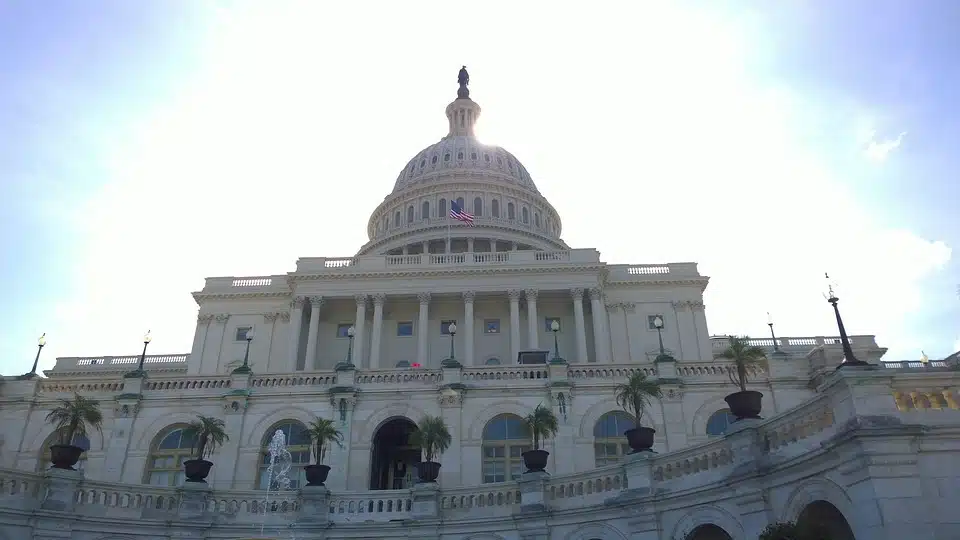
In Washington, it’s a bit of a different story. The two parties, per usual, are generally divided on the question of whether AI is a tool for social good or a havoc-wreaking technology that poses potentially existential risks to Americans. This week, we look at those divisions — particularly when it comes to AI and financial services and financial technology products. We also examine the U.S. Senate’s new roadmap for regulating AI and what Americans think about this burgeoning technology.
Let’s start with the people themselves.
How Americans Feel About Artificial Intelligence
To say Americans are skeptical of AI might be an understatement. Last fall, for example, a poll by Pew Research Center found 52 percent of Americans are more concerned than excited about the use of AI in daily life, compared with just 10 percent who told Pew they are more excited than concerned. Another one-third are not sure how to feel. Thirty-six percent of respondents told Pew they feel a mix of excitement and concern.
An Elon University poll released this February asked why Americans are so worried. It found 55 percent of Americans fear AI will have a negative impact on jobs and 66 percent are worried it will erode their privacy. Americans were less concerned that AI would exacerbate income inequality or be used to undermine basic human rights.
Americans also have a very immediate concern about AI: that it will be used by bad actors to influence the outcome in the 2024 election. A separate survey from Elon University that was released two weeks ago found:
- 78 percent of Americans expect abuses of AI will affect the outcome of the 2024 presidential election;
- 73 percent believe it is “very” or “somewhat” likely AI will be used to manipulate social media to influence the outcome of the presidential election;
- 70 percent say it is likely the election will be affected by the use of AI to generate fake information, video, and audio material; and
- 62 percent believe the election is likely to be affected by the targeted use of AI to convince some voters not to exercise their right to vote.
Perhaps because of these worries, Americans are quite open to the idea of regulating AI.
A survey released in April by Authority Hacker, a marketing firm, found nearly 80 percent of Americans – an incredibly large portion of the populace – think governments “should implement strict AI regulations, even if it means slowing down technological innovation.”
In this regard, U.S. voters are clearly in line with Democrats on Capitol Hill.
On Capitol Hill, Democrats Are More Skeptical Of AI
In general, House and Senate GOP lawmakers have been more likely to concentrate on the potential upsides of AI adoption and to want to refrain from putting in place rules that would slow down innovation. Democrats, on the other hand, have expressed anxiety.
As noted by Brookings’ Darrel M. West, for example, earlier this month in a Senate Judiciary Subcommittee on Privacy, Technology, and the Law hearing, the panel’s chair, Sen. Richard Blumenthal (D-Conn.) expressed worries about “voice-cloning software” and dystopias that were “no longer fantasies of science fiction.” The senator cited the weaponization of disinformation, housing discrimination, and deep fake videos as the issues that were among his top concerns, West reported.
Sen. Bob Menendez (D-N.J.) thinks AI could lead to more instances of financial fraud. “According to the FTC, consumers reported losing nearly $9 billion to fraud in 2022, with more than a quarter of those losses coming from imposter scams,” Sen. Menendez said in a hearing last September. “Consumers could see themselves becoming victims of increasingly sophisticated scams as a result of AI, both due to increasingly accurate deepfakes and more precisely targeted social engineering attacks. And it’s not just the consumers that are being targeted. There have been reports of scammers using AI to imitate a consumer’s voice in order to trick their bank or credit card servicer into transferring funds or giving away information.”
As far back as 2021, Democratic senators like Cory Booker (N.J.), Ron Wyden (Ore.), and Ed Markey (Mass.) were writing to Google warning them about bias in AI. These worries are not unfounded. Policymakers have questioned whether AI could be – or is being – used by lending institutions, for example, to find information on spending habits or political views before making or denying loans to consumers.
We have seen some bipartisanship in this space, however, both in the House and Senate.
In February, House Financial Service Committee Chairman Patrick McHenry (R-N.C.) and Ranking Member Maxine Waters (D-Calif.) formed a bipartisan Working Group on AI to explore the benefits and dangers of the technology. Even then, however, in a joint press release, Rep. Waters said she was concerned about AI’s impact on the financial services and housing industries, including, as noted above, firms’ use of AI in decision-making, fraud prevention, and regulatory compliance.
“I’ve long called on both this Committee and Congress to move quickly to investigate the ways in which this technology may embed historic inequities in the financial services and housing markets through the use of data that reflect underlying bias or discrimination,” Rep. Waters noted.
Despite the potential downsides, Democrats do understand they cannot ignore this issue. Indeed, last fall, Senate Majority Leader Charles Schumer (D-N.Y.) called for action. “We have no choice but to acknowledge that AI’s changes are coming, and in many cases are already here. We ignore them at our own peril,” Sen. Schumer said. “The question is: what role does Congress and the federal government have in this new revolution?”
The majority leader tried to answer that question two weeks ago when he and a group of senators released a “Bipartisan Roadmap For Artificial Intelligence Policy.” Sens. Mike Rounds (R-S.D.), Martin Heinrich (D-N.M.), and Todd Young (R-Ind.) joined the majority leader in issuing the outline.
What Does The Senate’s Bipartisan Roadmap For AI Call For?
To come up with its roadmap, Majority Leader Schumer and the bipartisan group convened nine forums that “sought to identify areas of consensus, as well as areas of disagreement, while also revealing where further work and research is needed.” The roadmap summarizes the group’s findings and “lays out a number of policy priorities that we believe merit bipartisan consideration in the Senate in the 118th Congress and beyond.”
Those priorities were:
- Increasing funding for AI innovation;
- Ensuring enforcement of existing laws for AI;
- Encouraging a conscientious consideration of the impact AI will have on our workforce, including the potential for job displacement;
- Addressing national security threats, risks, and opportunities for AI;
- Addressing challenges posed by deepfakes related to election content and nonconsensual intimate images;
- Identifying ways to ensure higher education institutions and companies of all sizes can compete in AI innovation; and
- Establishing a strong comprehensive federal data privacy framework.
As you can probably tell, the roadmap was very general and doesn’t address specific actions Congress should take regarding any industry’s use of AI, much less the financial services and financial technology industries’ deployment of the tool.
The Biden administration has been slightly more specific, at least when it comes to protecting consumers and workers. An April White House executive order called for:
- Developing “bedrock principles and practices for employers and developers to build and deploy AI safely and in ways that empower workers”;
- Releasing guidance to help employers comply with worker protection laws as they deploy AI;
- Issuing resources for job seekers, workers, and tech vendors and creators on how AI could violate employment discrimination laws;
- Providing guidance on AI’s nondiscriminatory use in the housing sector;
- Publishing guidance and principles that set guardrails for the responsible and equitable use of AI in administering public benefits programs;
- Issuing a regulation to clarify nondiscrimination requirements in health programs and activities; and
- Developing a strategy for ensuring the safety and effectiveness of AI deployed in the healthcare sector.
Even Without Regs In Place, Washington Will Be Watching
It will take time for the White House, whoever occupies it in the coming years, and members of Congress to write the rules of the AI road.
Even without them, however, lawmakers and regulators will be using their oversight powers to shape the marketplace. Specifically, Sen. Blumenthal and his ranking member on the Senate Judiciary Subcommittee on Privacy, Technology, and the Law, Sen. Josh Hawley (R-Mo.), will be watching. “AI companies should be forced to take responsibility for business decisions as they’re developing products,” Sen. Blumenthal said. “We can’t make the same mistakes with generative AI as we did with Big Tech,” said Sen. Hawley. “When these new technologies harm innocent people, the companies must be held accountable.”
The two have authored a bill that, if signed into law, would strip immunity from AI companies in civil claims or criminal prosecutions involving the use or provision of generative AI. The legislation also would allow Americans harmed by generative AI to sue AI companies in federal or state court.
So what is a firm to do?
“[T]he rapid adoption of AI within banking institutions necessitates a robust governance framework to ensure effective risk management, transparency and accountability,” Anil Sood, who leads the AI Governance practice at EY Canada, advised recently in Forbes. “The expanding landscape of AI risk highlights the pressing need for comprehensive and cohesive governance practices.”
Good advice.