
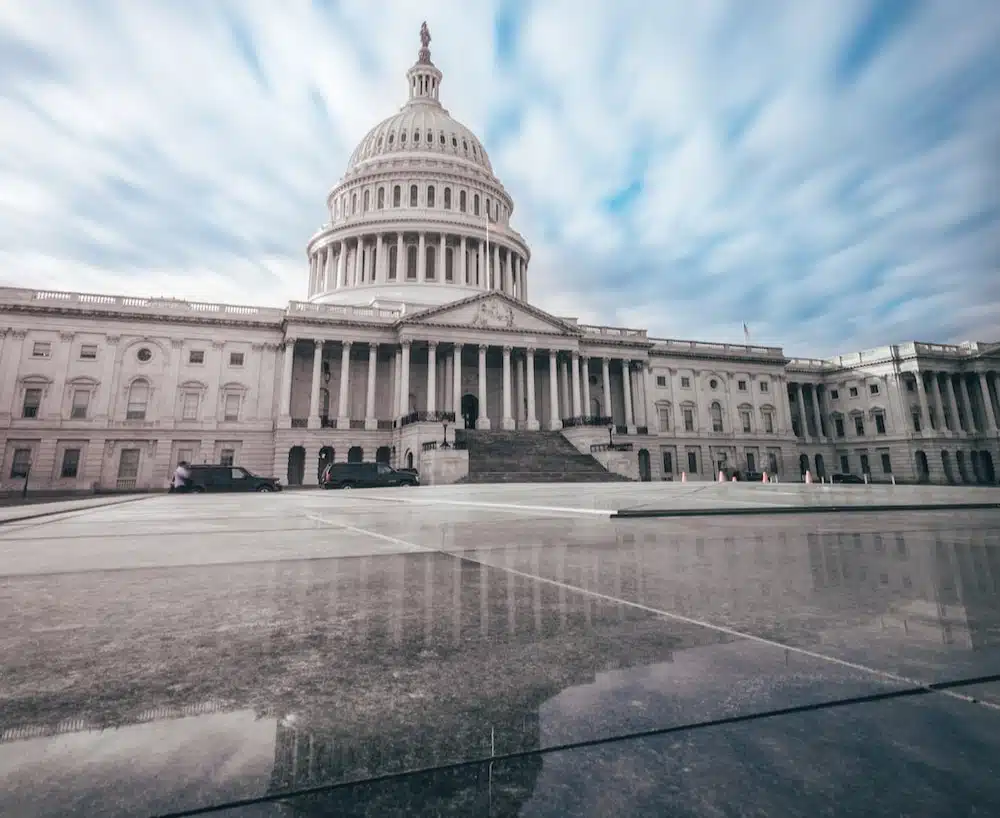
For the 13th time yesterday, members of the U.S. Senate voted down an attempt to move forward on a short-term fiscal year 2026 spending bill. The vote was 54-45. (The Senate requires 60 favorable votes to move forward to a final majority vote on the measure.)
As a result, the federal government shutdown is now in its 29th day. If the impasse lasts until next Tuesday, November 4, it will be the longest federal government shutdown in U.S. history.
While the parties still appear far apart on their demands — Republicans want to approve a “clean” spending bill with no additional policy provisions attached to it while Democrats want the measure to include extension of Affordable Care Act (ACA) health insurance tax benefits — over the next few days several forces could converge that may (may!) compel action.
What are those action-forcing events, and how is the shutdown saga playing the public?
Let’s take a look.
Food Aid, Health Insurance, And Education All Impacted
On Saturday, November 1 approximately 42 million families struggling with poverty may not receive benefits that are scheduled to be released that day from the U.S. Department of Agriculture’s (USDA) Supplemental Nutrition Assistance Program (SNAP).
Originally, USDA leadership said it would use has emergency funds to provide the November SNAP benefits, but they reversed its position last week, arguing that pool of funding is intended for emergency situations like natural disasters, not government shutdowns. As The Hill reported, Democrats have argued that withholding the emergency funds is unlawful, but USDA leaders have no plans to distribute the funding to states in order to continue the food aid program.
Senate Democrats intend to offer a standalone piece of legislation today that, if approved by the Senate and U.S. House, would force the federal government to release funding to the states. With Republicans in control of the two chambers of Congress, the legislation is likely to fail, of course. (Indeed, yesterday, House Speaker Mike Johnson, R-La., said the Democrats’ move was a “waste of our time.) Sen. Josh Hawley (R-Mo.) also has written a bill to fund SNAP. Ten of his GOP colleagues have signed on a cosponsors.
In the meantime, 25 states and the government of the District of Columbia launched a lawsuit yesterday to compel the Trump administration to release funding to the states for SNAP.
November 1 is a potential action-forcing date for another reason as well since that is when open enrollment for ACA marketplaces begins. With the ACA tax benefits set to expire at the end of this year, the prices reflected in marketplaces will reflect the expiration, which could dampen enrollment in health insurance plans, causing the nation’s uninsured rate to spike.
The real ACA payment pain will not start until January 1, 2026, however. “If Congress doesn’t act … costs are expected to skyrocket at the start of next year,” The Hill explained this morning. “The increase would directly impact more than 20 million ACA enrollees, but the fallout is expected to reverberate far beyond that, as hospitals and other providers scramble to adjust to the expected spike in the number of uninsured patients.”
Analysts have estimated premiums could rise by as much as 20 percent.
Also on November 1: Head Start may run out of money. “Tens of thousands of children from low-income families could lose access to education, meals, and health care if federal Head Start cash doesn’t resume” by Saturday, Politico reported.
Air Traffic Control, Hurricane Response, And Safety Functions Also At Risk
The consequences of not paying federal workers, including members of the military and air traffic controllers, are piling up as well.
More than 1.3 million members of the military are supposed to receive paychecks on November 1. Treasury Secretary Scott Bessent has said the U.S. Department of Defense has enough unobligated dollars to pay troops this weekend, but funding will run out by the time military personnel are supposed to be paid on November 15.
Additionally, yesterday, U.S. Transportation Secretary Sean Duffy warned his agency will run out of money for air traffic control student stipends in about a week, a problem that will further erode safe and on-time air travel since airports already are short-staffed because controllers are de facto striking rather than working without a paycheck.
Federal government employees are turning to the private sector for help. According to AXIOS, USAA has issued more than 90,000 no-interest loans to federal employees affected by the government shutdown, totaling about $328 million.
Another problem amplified by the failure to pay government workers? Hurricane Melissa.
The category five storm made landfall in Jamaica with wind speeds topping 185 miles per hour. The National Oceanic and Atmospheric Administration (NOAA) is monitoring the storm, but the agency’s pilots and scientists are going unpaid as they “fly into the storm aboard hurricane hunter aircraft,” Politico reported. Rick Spinrad, a former NOAA administrator told Politico, “Flying repeatedly through a powerful hurricane is a true test of one’s mettle. Doing so without any assurances of being paid is solid testimony to one’s service to their country.”
The shutdown could affect disaster response should Hurricane Melissa hit the United States. Lawmakers fear delays in disaster-related financial assistance, fewer personnel to complete disaster response and recovery tasks, and the suspension of services like weather monitoring and long-term food safety initiatives.
Air traffic controllers and NOAA pilots are not the only ones who are working without pay. The U.S. Department of Labor has required more than 950 employees to keep working on duties deemed “necessary to protect life and property,” according to Politico. “Many of them are currently conducting on-site inspections of accidents, mine collapses and other high-risk hazards,” the newspaper said.
One policy President Trump is having difficulty holding over Democrats’ heads? His plan to use the shutdown to permanently fire tens of thousands of federal workers. Yesterday, Judge Susan Illston of the U.S. District Court for the Northern District of California, extended her moratorium on executing the Trump administration’s plan. As Roll Call said, “The injunction is expected to last while the case is pending but could be appealed.”
To try to address the issue of employee pay, Sen. Ron Johnson (R-Wis.) said this week that has offered Democrats a proposal to pay all federal workers — essential and furloughed federal employees — while federal departments and agencies are shut down.
Neither Party Is “Winning” The Shutdown
In voters’ minds, Republicans and Democrats appear to be sharing blame for the shutdown.
According to a Quinnipiac poll, 45 percent of registered voters think Republicans in Congress are more responsible for the government shutdown, while 39 percent think Democrats in Congress are more responsible. Another 11 percent said they think both parties are equally responsible.
As Quinnipiac noted, Democrats and Republicans hold the party more responsible for the government shutdown. The GOP does seem to be losing Independent voters, however. Among that group, 48 percent think Republicans in Congress are more responsible for the shutdown, while 32 percent think Democrats in Congress are more responsible. Another 14 percent said they think both parties are equally responsible.
Still, voters’ overall view of both Democratic and GOP lawmakers has risen.
According to Quinnipiac, 26 of voters approve of the way the Democrats in Congress are handling their job, while 67 percent disapprove. In a Quinnipiac poll this past July, 19 percent of voters approved of the way the Democrats in Congress were handling their job and 72 percent disapproved. Today, 35 percent of voters approve of the way the Republicans in Congress are handling their job while 59 percent disapprove. In July, Quinnipiac found 33 percent of voters approved of the way the Republicans in Congress were handling their job while 62 percent disapproved.
Will unsteady poll numbers, or the action forcing events mentioned above, compel lawmakers into action, resulting in a solution to this stalemate? Perhaps Punchbowl said it best this morning: “At some point, the government shutdown is going to end. Maybe. Somehow. We hope.”